
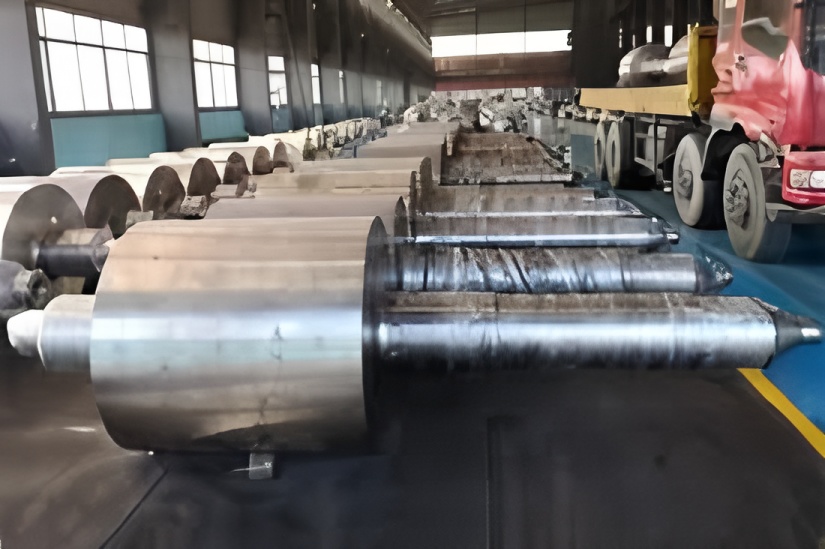
In the metalworking and manufacturing industries, selecting the right grade and processing method for steel is critical for product integrity and cost-efficiency. While the base chemical composition of steel might remain similar, the processing method—specifically the temperature at which it is rolled—fundamentally alters its mechanical properties, surface finish, and dimensional accuracy.
This guide provides a comprehensive technical analysis of the differences between Hot Rolled Steel and Cold Rolled Steel, while also examining the critical role of rolling mill rolls in determining the final quality of these materials. For manufacturers, understanding the interaction between the workpiece and the mill roll material is key to optimizing production.
1. The Fundamental Difference: Temperature and Recrystallization
The primary distinction lies in the processing temperature relative to the steel’s recrystallization temperature.
Hot Rolled Steel: Above Recrystallization
Hot rolling involves processing steel slabs at temperatures exceeding 1,700°F (926°C), which is above the recrystallization temperature for most steels. At this heat, the steel is highly malleable, allowing it to be formed into shapes with relative ease.
- Raw Material: Large steel slabs or billets.
- Process Flow: Ironmaking → Steelmaking → Continuous Casting → Roughing Mill → Finishing Mill.
- Microstructure: Because the steel cools gradually at room temperature after rolling, the microstructure normalizes. This prevents internal stresses associated with work hardening, resulting in a material with high ductility and toughness.
Cold Rolled Steel: Below Recrystallization
Cold rolled steel is essentially hot rolled steel that has undergone further processing. The material is cooled to room temperature (below the recrystallization point) and then annealed or temper-rolled.
- Raw Material: Hot rolled steel coils (after pickling to remove scale).
- Process Flow: Hot Rolling → Acid Pickling → Cold Rolling → Annealing (optional) → Temper Rolling.
- Microstructure: The process introduces “work hardening” or strain hardening. This increases the yield strength and hardness but reduces ductility unless subsequent heat treatment (annealing) is applied.
2. The Vital Role of Rolling Mill Rolls
The quality of the final steel product is directly dependent on the quality of the steel mill rolls used during production. HANI specializes in manufacturing precision rolls designed to withstand the distinct stresses of both hot and cold mill environments.
Hot Rolling Mill Rolls
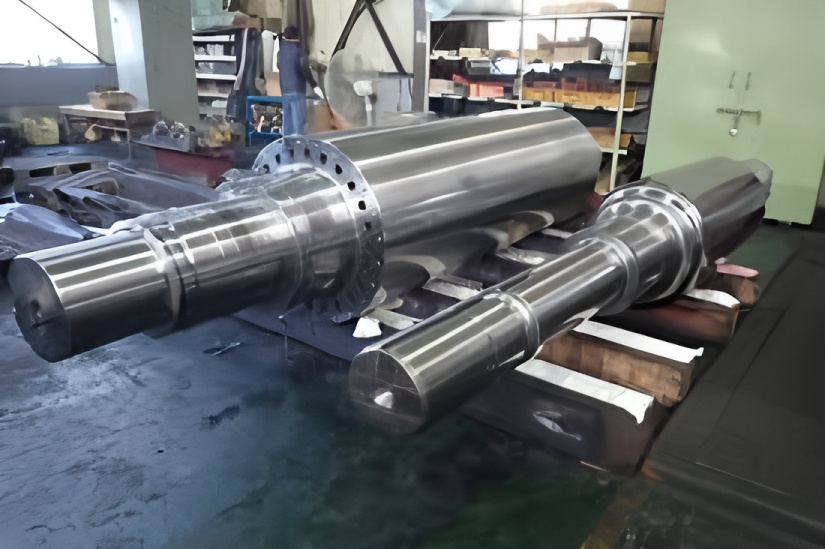
In hot mills, the work roll faces extreme thermal cycling, oxidation, and abrasion. The rolls must resist surface cracking (fire crazing) caused by the alternating heating from the steel and cooling from water jets.
- Common Materials: Adamite, High Speed Steel (HSS), and High Chromium Iron.
- Challenge: Maintaining surface profile despite thermal expansion and wear. HANI utilizes specific alloy recipes to ensure deep hardness penetration and resistance to thermal fatigue.
Cold Rolling Mill Rolls
Cold rolling mill rolls operate under immense pressure to reduce the thickness of the already cooled, harder steel. The focus here is on deflection resistance and surface finish.
- Common Materials: Forged Steel (2% Cr, 3% Cr, 5% Cr) and semi-high speed steel.
- Requirement: These rolls require exceptional hardness (often exceeding 60-65 HRC) to impart a mirror-like finish to the strip and maintain tight gauge tolerances.
3. Comparative Technical Analysis
Below is a detailed comparison of properties useful for engineers and procurement specialists.
| Feature | Hot Rolled Steel (HRS) | Cold Rolled Steel (CRS) |
|---|---|---|
| Dimensional Tolerance | Looser tolerances. As steel cools, it shrinks slightly and unpredictably. | Precise tolerances. Thickness is controlled strictly by the cold mill gap. |
| Surface Finish | Rough, blue-grey finish. Often has a layer of mill scale (iron oxide). | Smooth, oily, metallic luster. superior aesthetic finish. |
| Hardness & Strength | Lower yield strength (~250-350 MPa). Softer and more pliable. | High yield strength (~350-550+ MPa). Up to 20% stronger due to strain hardening. |
| Internal Stress | Low internal stress (Normalized structure). | High internal stress unless fully annealed. Prone to warping if cut. |
| Key Applications | Structural beams (I-beams), railroad tracks, agricultural equipment, sheet piling. | Automotive body panels, home appliances, metal furniture, precision tubing. |
4. Surface Quality and Aesthetics
The visual difference is the easiest way to distinguish the two. Hot rolled steel has a characteristic scaly surface. This “mill scale” is a residue of oxides that form at high temperatures. While it protects the steel from corrosion during storage, it must be removed via pickling or blasting before painting or welding.
Conversely, cold rolled steel involves mill roll grinding techniques that impart a specific texture or polish to the strip. Using HANI’s precision-ground rolls ensures that the cold rolled sheet meets the stringent roughness parameters (Ra values) required by the automotive and appliance sectors.
5. Processing Challenges and Roll Selection
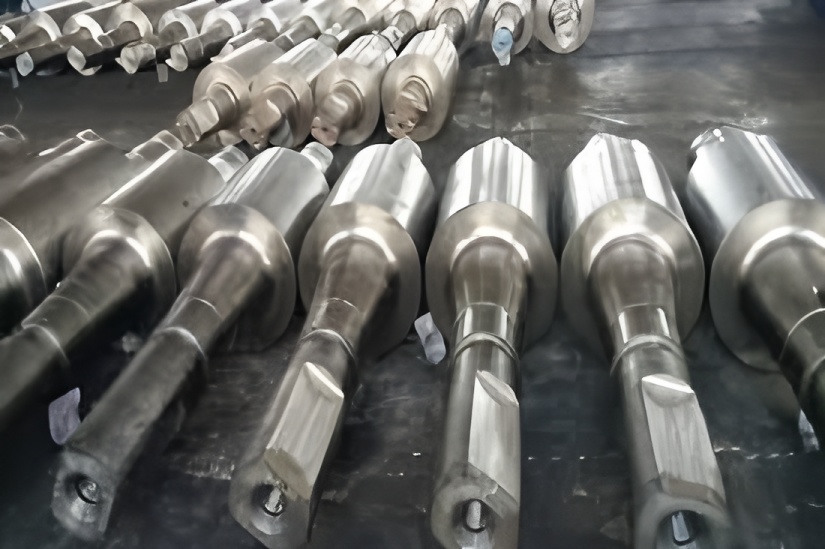
Achieving the desired mechanical properties requires careful selection of the rolling mill roll material. A mismatch between the roll type and the mill application can lead to common defects.
- Wear Resistance: Hot mill rolls must combat abrasion from scale. High-speed steel (HSS) rolls are increasingly favored for finishing stands to extend the campaign life between roll changes.
- Bite Capability: For the initial passes in a hot mill, rolls need good “bite” to grab the slab. Graphite steel rolls (as shown in Figure 2) are excellent for this purpose due to the lubricating effect of graphite in the matrix.
- Surface Criticality: For cold mills, forged rolls are preferred over cast rolls to avoid microstructure porosity that could transfer blemishes onto the thin steel sheet.
6. Conclusion
The choice between hot rolled and cold rolled steel ultimately depends on the application’s requirement for precision, strength, and surface aesthetics versus cost and formability.
- Choose Hot Rolled Steel for structural components where tolerances are not critical, and surface finish is secondary.
- Choose Cold Rolled Steel for precision parts requiring high strength, tight tolerances, and a superior surface finish.
Regardless of the steel type, the efficiency of the production line relies on the durability and precision of the rolling mill rolls. HANI provides engineered roll solutions—from alloy chilled cast iron to sophisticated forged steel—ensuring that steel producers can meet the rigorous demands of modern industry with minimal downtime and maximum output.