
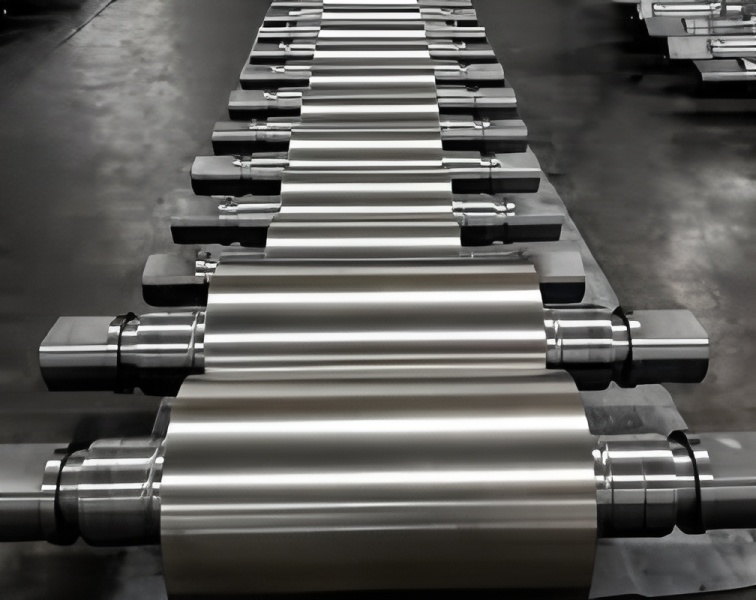
Advantages and Disadvantages of Hot Rolling and Cold Rolling in Modern Steel Production
In the world of metal forming, particularly in steel manufacturing, hot rolling and cold rolling are two fundamental processes that define the mechanical properties, dimensional accuracy, and surface quality of final products. These methods differ significantly in temperature, deformation behavior, equipment requirements, and application suitability. Understanding the advantages and disadvantages of hot rolling and cold rolling is essential for engineers, mill roll specialists, and plant managers when selecting the appropriate process for producing high-quality steel sections, sheets, or plates.
This comprehensive analysis explores both techniques with technical depth, real-world performance data, and practical insights relevant to modern rolling mill operations, including considerations around mill roll material selection, wear resistance, and production efficiency. We’ll also examine how forged rolls, tungsten carbide rolls, and advanced roll grinding technologies impact these processes.
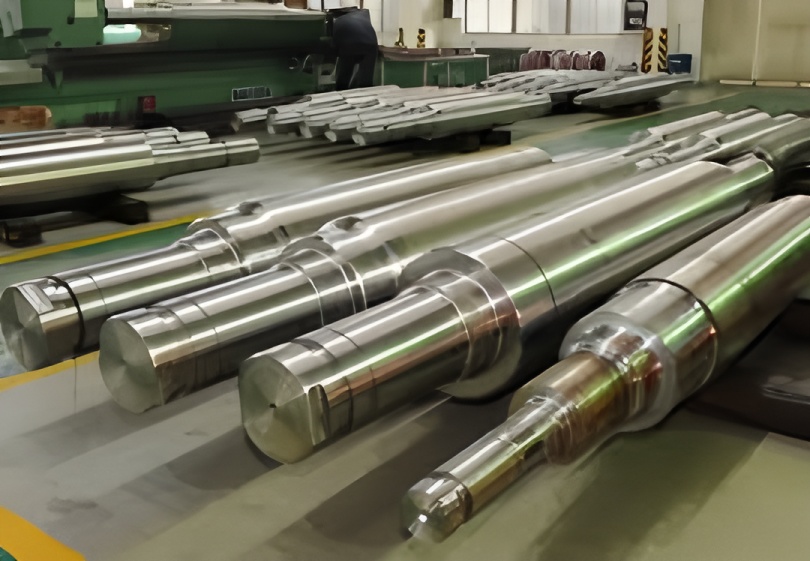
High-strength forged work rolls and intermediate rolls designed for cold rolling mill applications – critical components influencing surface finish and dimensional control.
What Is Hot Rolling? Key Process Characteristics
Hot rolling is a metalworking process where steel billets or slabs are deformed above their recrystallization temperature—typically between 1,100°C and 1,300°C for carbon steels. At this elevated temperature, the metal exhibits high ductility and low yield strength, allowing large deformations with reduced rolling force. The process is widely used in steel rolling mill machines such as two-high, three-high, and tandem rolling mills.
Common applications include structural sections (I-beams, channels), rails, rebar, and hot-rolled coils used in construction, automotive frames, and heavy machinery. Mill rolls used in hot rolling must withstand extreme thermal cycling, abrasion, and oxidation—making materials like alloy-chilled cast iron rolls, forged steel rolls, and tungsten carbide composite rolls ideal choices.
Advantages of Hot Rolling
- ✓
Fast forming speed and high output: Continuous automated lines in modern industrial rolling mills can produce up to 5,000 tons per day, making hot rolling highly efficient for bulk production. - ✓
No damage to the coating (pre-existing): Since no post-coating is applied during hot rolling, any pre-treated surfaces remain intact unless removed by scale formation. - ✓
Versatile cross-sectional forms: From flat sheets to complex I-sections and H-beams, hot rolling accommodates diverse profiles via precise roll pass design and multi-stand setups. - ✓
Reduced energy consumption and costs: Due to lower flow stress at high temperatures, power requirements are typically 30–40% less than equivalent cold forming operations. - ✓
Improved processing performance: Recrystallization during hot working eliminates casting porosity and segregations, refining grain structure and improving toughness and weldability.
Disadvantages of Hot Rolling
- ✗
Residual stress in the cross-section: Uneven cooling leads to internal stresses affecting buckling resistance and dimensional stability. - ✗
Poor torsional resistance: Open cross-sections (e.g., channels) have low free torsional stiffness (J values often below 5 cm⁴/mm), increasing twist under load. - ✗
Weak capacity for localized concentrated loads: Thin-walled sections without stiffening at joints may buckle under point loading. - ✗
Difficulty in thickness control: Thermal expansion and scale formation lead to tolerances of ±0.5 mm or more, compared to ±0.05 mm in cold rolling. - ✗
Non-uniform structure and performance: Edge-to-center variations in cooling rate cause inconsistent hardness and tensile strength across the section.
What Is Cold Rolling? Precision Through Deformation
Cold rolling occurs at room temperature or slightly above, typically below one-third of the metal’s melting point. Unlike hot rolling, it does not rely on recrystallization but instead uses significant plastic deformation to enhance strength through strain hardening. It’s commonly performed using 4Hi cold rolling mills or cluster mills equipped with hardened work rolls and backup rolls.
The process is ideal for producing thin gauge sheets, strips, and foils requiring tight tolerances and excellent surface finishes—such as those used in appliances, electronics, and automotive panels. Materials processed include low-carbon steels, stainless steels, aluminum alloys, and copper.
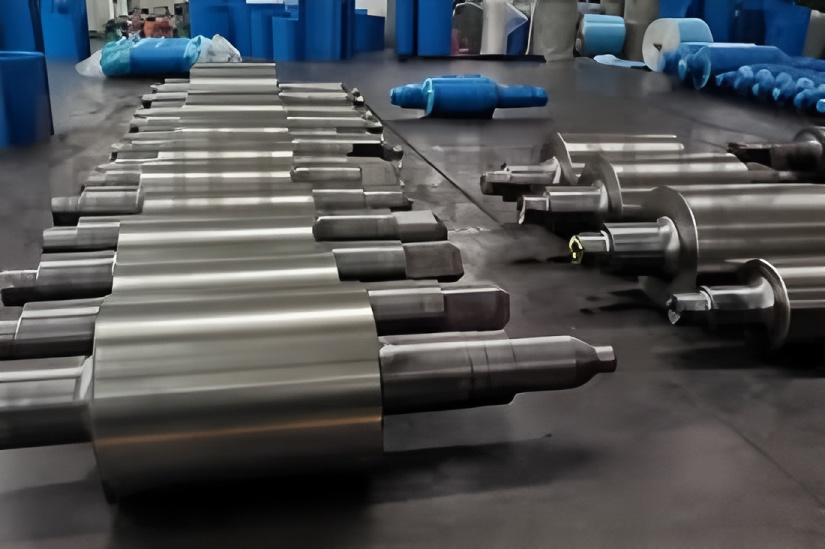
Alloy-chilled cast iron rolls used in hot rolling mill stands—engineered for superior wear resistance and thermal fatigue life.
Advantages of Cold Rolling
- ✓
Fast forming speed and high output: Modern tandem cold mills operate at speeds exceeding 1,200 m/min, enabling mass production of precision strip. - ✓
No damage to the coating: Pre-coated materials (e.g., galvanized steel) retain integrity if proper tension and roll surface finish are maintained. - ✓
Versatile cross-sectional forms: With advanced roll tooling, cold rolling can produce corrugated, embossed, or profiled sheets with micron-level accuracy. - ✓
Increased yield strength: Strain hardening increases yield strength by up to 150%; e.g., from 250 MPa to over 600 MPa in low-carbon steel. - ✓
Superior surface quality: Surface roughness (Ra) can be controlled down to 0.1–0.4 μm, suitable for painting, plating, or direct use in visible components.
Disadvantages of Cold Rolling
- ✗
Residual stress: High rolling forces introduce residual stresses that may require stress-relief annealing before further fabrication. - ✗
Poor torsional resistance: Similar to hot-rolled sections, open cold-formed shapes exhibit limited resistance to twisting moments. - ✗
Weak capacity for localized concentrated loads: Thin gauges (often <0.5 mm) lack local rigidity, necessitating additional stiffeners in design.
Comparative Analysis: Hot vs Cold Rolling Performance Metrics
To assist decision-making in industrial settings, the following table compares key parameters between hot and cold rolling processes based on real operational data from integrated steel plants and independent rolling mills.
| Parameter | Hot Rolling | Cold Rolling |
|---|---|---|
| Operating Temperature | 1100–1300°C | 20–200°C |
| Yield Strength Increase | Minimal (recrystallization) | Up to +150% |
| Surface Roughness (Ra) | 3.0–6.0 μm | 0.1–0.4 μm |
| Dimensional Tolerance | ±0.5 mm typical | ±0.02 to ±0.05 mm |
| Production Speed | Up to 10 m/s (slab) | Up to 20 m/s (strip) |
| Common Mill Types | Tandem, Two-High, Three-High | 4Hi, Cluster, Sendzimir |
| Typical Mill Roll Material | Forged steel, Chilled cast iron | Tungsten carbide, High-chrome steel |
| Roll Wear Rate | High (thermal fatigue dominant) | Moderate (abrasive wear) |
Role of Mill Rolls in Rolling Efficiency and Product Quality
The choice of mill roll material directly impacts the success of both hot and cold rolling operations. As highlighted in the reference images, forged work rolls offer exceptional toughness and crack resistance, while alloy-chilled cast iron rolls provide excellent wear resistance at lower cost.
Leading mill roll manufacturers such as Hanmill Rolls and United Rolls specialize in custom-engineered solutions including:
- •
Forged steel work rolls for cold rolling mills requiring high bending strength - •
Tungsten carbide rolls for rolling mills used in precision finishing stands - •
Mill roll grinding services to restore surface finish and roundness - •
Roll pass design software integration for optimized deformation control
Regular maintenance—including how to clean rolling mill rollers and timely backup roll grinding—is crucial to prevent defects such as work roll spalling, misruns, and surface imprints. Advanced roll shops now employ laser profiling and dynamic balancing to extend roll life and improve product consistency.
Conclusion: Selecting the Right Process Based on Application Needs
Both hot rolling and cold rolling play indispensable roles in modern metallurgy. While hot rolling excels in high-volume, cost-effective shaping of thick sections, cold rolling delivers unmatched precision, strength, and surface quality for thin, high-value products.
The decision should consider factors such as:
- •
Required dimensional accuracy and surface finish - •
Mechanical property targets (yield strength, elongation) - •
Production volume and throughput requirements - •
Compatibility with downstream processes (coating, welding, forming)
Ultimately, partnering with an experienced rolling mill roll manufacturer in India or global supplier ensures access to high-performance steel mill rolls, technical support, and lifecycle optimization strategies. Whether you’re operating a flat roll steel mill or a specialized tandem cold rolling mill, understanding the full spectrum of advantages and disadvantages of hot rolling and cold rolling empowers smarter, more profitable decisions.
Explore premium forged rolls, tungsten carbide roller rings, and expert mill roll grinding services at Hanmill Rolls — your trusted partner in advanced rolling technology.