
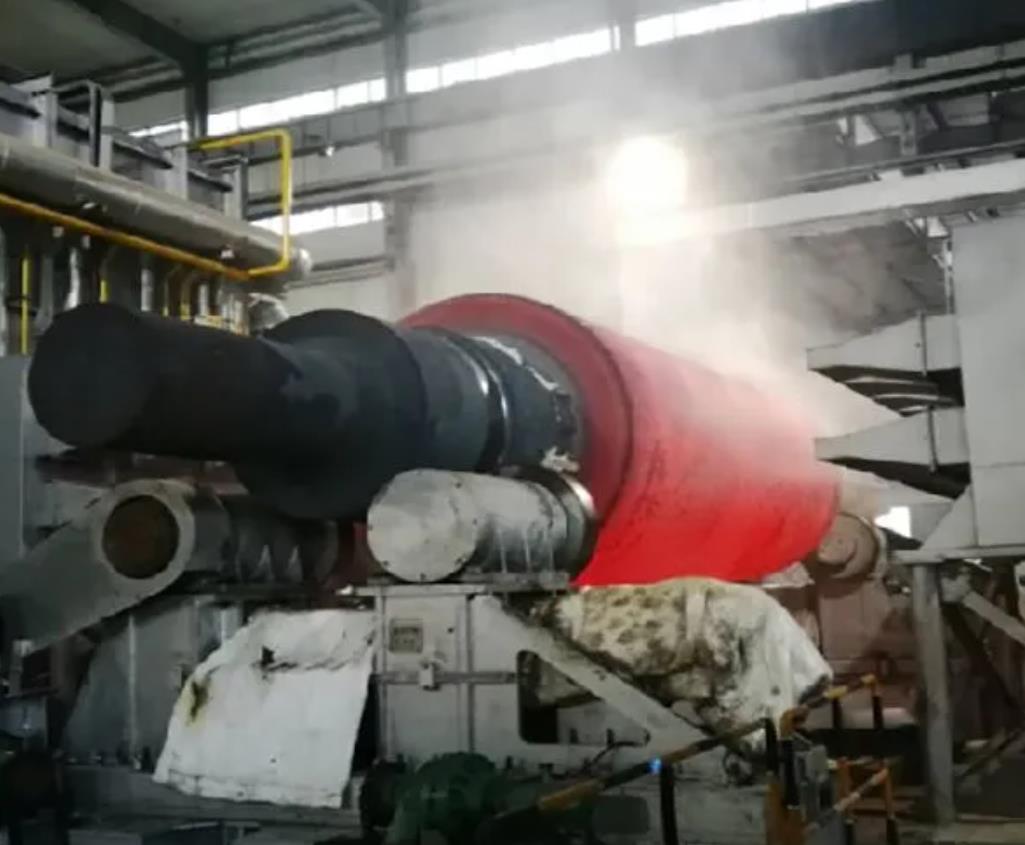
From iron ore to finished steel, the material undergoes a series of complex processes to produce different categories. Hot-rolled steel coils and cold-rolled steel coils are the two most common types. Hot-rolled coils serve as the raw material for cold-rolled coils but can also be sold and used independently, similar to cold-rolled coils.
There are significant differences in process characteristics, advantages, disadvantages, and applications between these two categories. Additionally, products from the new ESP process often cause confusion among users. This article analyzes and compares these three products.
Hot-Rolled Steel Coil
Process Characteristics
Hot-rolled steel coils are produced by rolling steel billets at high temperatures. In this process, the steel is heated above the recrystallization temperature, typically between 1000°C and 1250°C, which provides good plasticity and low deformation resistance. After hot rolling, the steel surface develops a layer of oxide scale, usually removed before use (e.g., through pickling or shot blasting).
Advantages
-
Good mechanical properties: Hot-rolled steel coils, rolled at high temperatures, exhibit excellent comprehensive mechanical properties, such as strength, plasticity, and toughness.
-
High production efficiency: The hot rolling process involves fewer steps, allows significant thinning, and offers high rolling efficiency.
-
Low cost: With a shorter production process and reduced energy consumption, the production cost for the same specification is lower than that of cold rolling.
Shortcomings
-
Low dimensional accuracy: The dimensional accuracy and surface finish of hot-rolled steel coils are inferior to those of cold-rolled coils.
-
Residual stress: Rapid cooling during hot rolling can introduce residual stress, potentially affecting subsequent processing performance.
-
Poor surface quality: Oxide scale on the surface during rolling can lead to embedded scale, and even after pickling and leveling, residual marks may remain.
Application
Hot-rolled steel coils are widely used in construction, bridges, ships, machinery manufacturing, and other fields. For example, patterned plates, beam steels, and boom steels are often manufactured using hot rolling technology.
Cold-Rolled Steel Coil
Process Characteristics
Cold-rolled coils are produced by further rolling hot-rolled coils at room temperature. Dimensions can be precisely controlled during cold rolling, followed by specialized heat treatment to achieve desired properties.
Advantages
-
High dimensional accuracy: Cold-rolled steel coils offer high precision in thickness, width, and other dimensions.
-
Excellent mechanical properties: Cold rolling and subsequent heat treatment provide higher strength, hardness, and good plasticity.
-
Good surface quality: The surface of cold-rolled coils is free of oxide scale and has high smoothness, making it suitable for direct use in manufacturing various parts.
Shortcomings
-
High production cost: The cold rolling process involves multiple steps, is complex, and has high energy consumption, resulting in higher production costs compared to hot-rolled coils.
-
Low production efficiency: The process is complicated with cumbersome material flow, leading to lower production efficiency than hot rolling.
Application
Cold-rolled steel coils are primarily used in manufacturing parts for automobiles, home appliances, electronic products, and other applications requiring high dimensional accuracy and surface quality.
ESP (Endless Strip Production)
The ESP production line is considered the third technological revolution in the steel industry after oxygen converter steelmaking and continuous casting, representing the highest level of hot-rolled strip technology today.
Many people previously thought that ESP was a cold-rolled product, but it is actually a thin-gauge hot-rolled pickled product. ESP uses a new endless strip rolling process, enabling fully continuous production from molten steel to hot-rolled coils on the coiler, and can produce ultra-thin hot-rolled steel coils as thin as 0.8mm.
Process Characteristics
-
Endless rolling: ESP technology allows fully continuous production from molten steel to hot-rolled coils without intermediate cutting.
-
Compact process: Continuous casting and rolling are directly connected, eliminating intermediate steps such as slab storage and heating furnaces.
-
High-speed production: The continuous casting machine operates at high pulling speeds of up to 7.0 m/min, significantly improving production efficiency.
-
High-precision control: Advanced control technology ensures accurate product thickness, width, and straightness.
Advantages
-
Energy saving and emission reduction: By eliminating intermediate heating steps, the ESP line greatly reduces energy and water consumption.
-
High yield rate: The yield from molten steel to hot-rolled coils can reach 97%-98%, much higher than traditional processes.
-
Reduced investment costs: Compact equipment layout lowers equipment and plant investment.
-
Improved product quality: ESP can produce ultra-thin hot-rolled coils, with typical thin specifications of 0.8mm (or even thinner), and excellent product performance.
Shortcomings
-
High initial investment: Although cost-effective long-term, ESP technology is not yet widespread, and initial investment is relatively high.
-
Technical threshold: The fully automated line requires no failures in any link to avoid shutdowns, demanding high skills from operators and maintenance staff.
-
Low flexibility: The high automation and continuity limit flexibility in changing product types compared to traditional lines.
Application
ESP provides a comprehensive replacement for cold-rolled products in scenarios where surface and performance requirements are not high but specifications and thickness are thinner, effectively substituting cold-rolled products in some applications.
Answers to Some Frequently Asked Questions
Question 1: What are the core advantages of ESP?
Low production cost and low carbon emissions. The compact process significantly reduces production costs and minimizes energy waste in intermediate steps, leading to lower carbon emissions. From this perspective, the rise of ESP technology is timely. As Europe and the U.S. promote carbon tariffs, hot-dip galvanized steel coils based on ESP will have a significant export advantage.
Question 2: What are the differences between hot-rolled, cold-rolled, and ESP products of the same specifications?
For example, take 2.0mm thick C-grade material:
-
Production cost: ESP < hot rolling < cold rolling
-
Surface quality: cold rolling > ESP > hot rolling
-
Production accuracy: cold rolling > ESP > hot rolling
Question 3: What are the differences in surface quality among the three products?
-
Hot-rolled coils: After pickling and leveling, the surface roughness is relatively high, with slight unevenness and occasional oxide scale peaks.
-
Cold-rolled coils: Rolled at room temperature after oxide removal, the large deformation during cold rolling flattens surface unevenness, resulting in a smoother, more uniform surface with roughness controlled by rollers.
-
ESP: As a hot-rolled pickled sheet, it is typically pickled and leveled before shipment, so surface quality is closer to cold-rolled products.
Question 4: Will ESP significantly reduce the market space for hot-rolled and cold-rolled products?
It will not greatly compress their space but will excel in economic specifications and grades. This depends on the ratio of special steel to commercial general materials. Traditional hot and cold rolling still have advantages in producing special steel (complex grades with multiple specifications), especially for fine-tuning performance. ESP has extreme cost advantages for single-specification ordinary grades, particularly as a coating substrate. In essence, ESP makes low-priced general materials even cheaper, highlighting economic benefits, but claiming it surpasses cold-rolled quality is an exaggeration.