
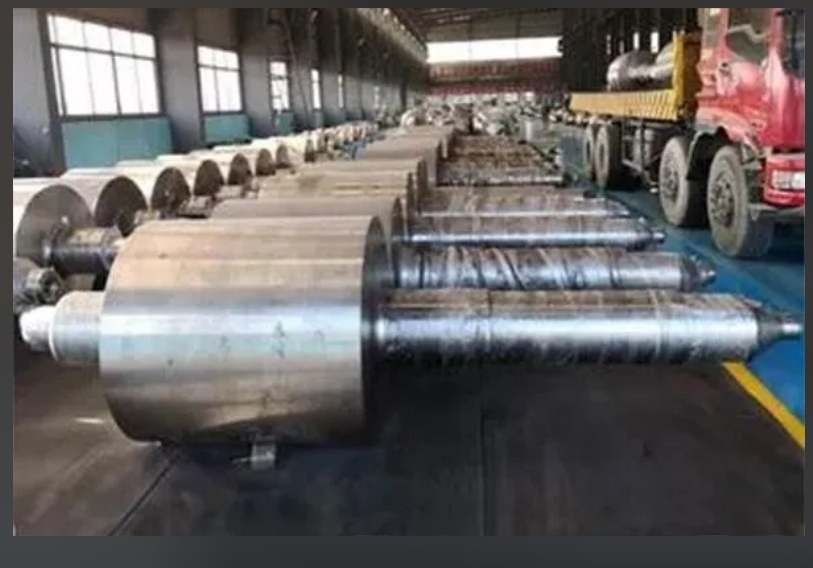
In the competitive landscape of steel production, cost reduction is a paramount objective for bar and wire rod mills. A significant portion of operational expenditure is attributed to the consumption of consumables, with rolling mill rolls being a primary component. To address this, forward-thinking factories are implementing a multi-faceted strategy encompassing material science, process optimization, and targeted technical transformations. These initiatives are not only reducing the direct costs associated with mill roll consumption but also enhancing overall production efficiency and product quality.
This article delves into the practical and proven methods employed by a leading bar and wire rod factory to achieve substantial savings. By focusing on key areas such as roll strength, material selection, and operational processes, the facility has set a new benchmark in cost-effective production, demonstrating how strategic improvements can lead to significant financial and operational gains.
1. Enhancing Rolling Mill Roll Strength to Combat Increased Loads
A primary challenge in modern rolling operations is the increased stress placed on mill rolls. The adoption of new processes like groove-free rolling and the use of larger billets (e.g., 160mm×160mm) significantly increase the rolling load. For this factory, the existing rolls in the coarse and medium rolling stands of the high-bar workshop were found to have insufficient strength, leading to a higher incidence of roll breakage, production stoppages, and inflated costs.
The solution was a direct and effective mechanical upgrade: increasing the maximum diameter of the rolls. This modification, implemented while ensuring compatibility with existing roll change assemblies, fundamentally enhances the roll’s structural integrity. A larger diameter increases the cross-sectional area and moment of inertia, allowing the roll to withstand greater forces without failure. This extends the service life, increases the steel throughput per roll, and drastically reduces consumption.
| Roll Specification | Original Max Diameter | Modified Max Diameter | Resulting Improvement |
|---|---|---|---|
| φ550mm Rolls | φ550 mm | φ580 mm | 10% reduction in roll consumption, saving ¥120,000 annually. |
| φ450mm Rolls | φ455 mm | φ480 mm | |
| φ380mm Rolls | φ405 mm | φ430 mm |
2. Maximizing Comprehensive Utilization of Rolling Mill Rolls
A holistic roll management program is crucial for minimizing waste. The factory operates two production lines with a wide variety of roll specifications. By implementing a comprehensive utilization strategy, they transformed their roll inventory from a simple consumable into a managed, reusable asset, saving over ¥1 million annually.
Key Utilization Strategies:
- ✓Optimized Procurement: The ordering method for φ600 and φ490 rolls was changed from standard flat rolls to pre-engraved groove rolls. This ensures the groove area, which experiences the most wear, is made from higher-quality, more wear-resistant material, increasing single-groove rolling volume.
- ✓Work Roll Material Upgrades: For φ550 and φ455 rolls, the material was upgraded from medium nickel-chromium-molybdenum normalized cast iron to higher-performance centrifugal cast iron. This change provides a superior combination of core strength and surface wear resistance.
- ✓Standardized Cascade Usage: A systematic “cascade” or “down-cycling” usage plan was implemented. Rolls are first used in stands with the highest precision requirements and are then repurposed for less demanding stands as they wear. For example, rolls from stands 1H/2H are moved to 3H/4H, and so on. This maximizes the useful life of every roll before it is scrapped.
3. Adopting New Material Rolls for High-Wear Applications
The finishing mill is where the final product shape is achieved, and the rolls here are subjected to extreme thermal and mechanical stress. In slit rolling applications, the rolls used for slit (K3), pre-slit (K4), and finished grooves (K1) are particularly prone to wear. The previously used bainite rolls suffered from severe cutting wedge damage and low single-groove steel capacity, leading to frequent, costly groove changes.
Through industry research, the factory identified and introduced high-boron high-speed steel rolls for these critical positions. The results were transformative. The superior hardness, red hardness (hot hardness), and wear resistance of this advanced material led to a dramatic increase in performance.
| Groove Position | Single-Groove Capacity (Bainite Rolls) | Single-Groove Capacity (High-Boron HSS) | Performance Increase |
|---|---|---|---|
| Slit K3 | 300 tons/groove | 2000 tons/groove | +567% |
| Pre-slit K4 | 600 tons/groove | 2400 tons/groove | +300% |
| Finished Groove K1 | 100 tons/groove | 200 tons/groove | +100% |
This single material change resulted in annual savings of over ¥800,000, while also improving process stability and control over product dimensions.
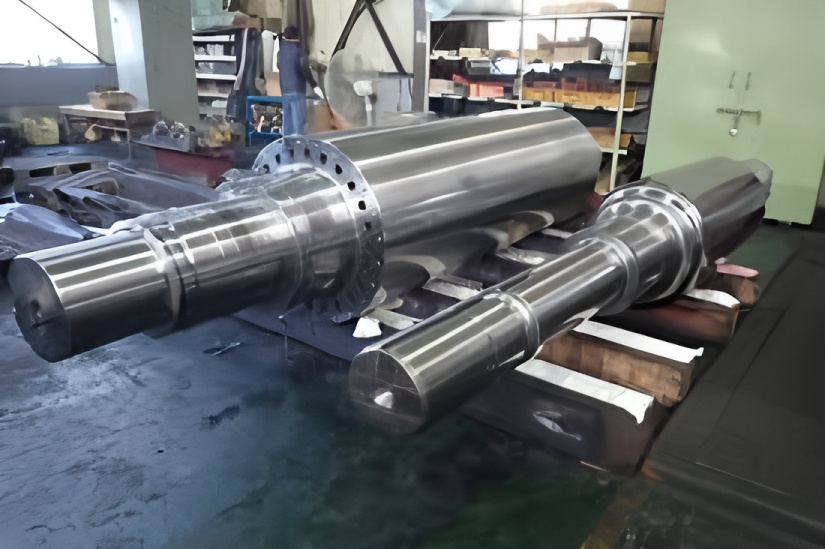
Alloy chilled cast iron rolls are an excellent choice for enhancing strength and wear resistance.
4. Equipment and Process Flow Optimizations
Beyond materials and roll dimensions, significant gains were achieved by refining the supporting equipment and operational processes.
Rolling Mill Beam and Cooling System Modification
Ineffective roll cooling is a major cause of thermal cracks and premature failure. An analysis revealed that the original cooling water beam design was inefficient, supplying water to all roll grooves simultaneously, including those not in use. This wasted nearly 50% of the cooling water and provided insufficient pressure and volume to the active grooves. The cooling water pipes were re-engineered to allow for targeted cooling of only the working grooves. This simple modification increased single-groove rolling capacity by 20%, reduced roll consumption by 20%, and saved ¥160,000 annually.
Threaded Tungsten Carbide Roller Ring Assembly Modification
Tungsten carbide roller rings are essential for producing high-quality threaded wire rods due to their exceptional wear resistance, but they are also very expensive. The original assembly method for φ210×72 rings only permitted the use of two rolling grooves. Given that threaded products constituted over 60% of the factory’s output, this was a significant area for improvement. The assembly was redesigned to increase the number of usable grooves: 4 grooves for φ8mm rings and 3 grooves for φ10~φ12mm rings. This increased the effective utilization of each costly ring by over 33.3%, yielding annual savings of more than ¥700,000.
Groove Process and Pass Design Optimization
Production flexibility is key to efficiency. The original groove design was incompatible between different wire rod diameters (e.g., φ10.0mm and φ12.0mm), forcing time-consuming and labor-intensive changes of multiple roll rings for a size change. To solve this, a common groove design was developed for the pre-finishing mills. This allows the same set of roll rings to be used for producing φ6.5mm, φ8.0mm, φ10.0mm, and φ12.0mm wire rods. This optimization eliminated unnecessary roll changes, saved hours of downtime, improved overall efficiency, and reduced annual roll consumption costs by over ¥100,000.
Conclusion: A Blueprint for Cost Reduction
The success of this bar and wire rod factory illustrates that a significant reduction in rolling mill roller consumption is achievable through a systematic and intelligent approach. By combining mechanical upgrades, advanced material science, and clever process optimizations, the facility has not only cut costs dramatically but also enhanced its operational resilience and efficiency. These practices serve as a valuable blueprint for any steel mill looking to maximize profitability and maintain a competitive edge in the global market.