
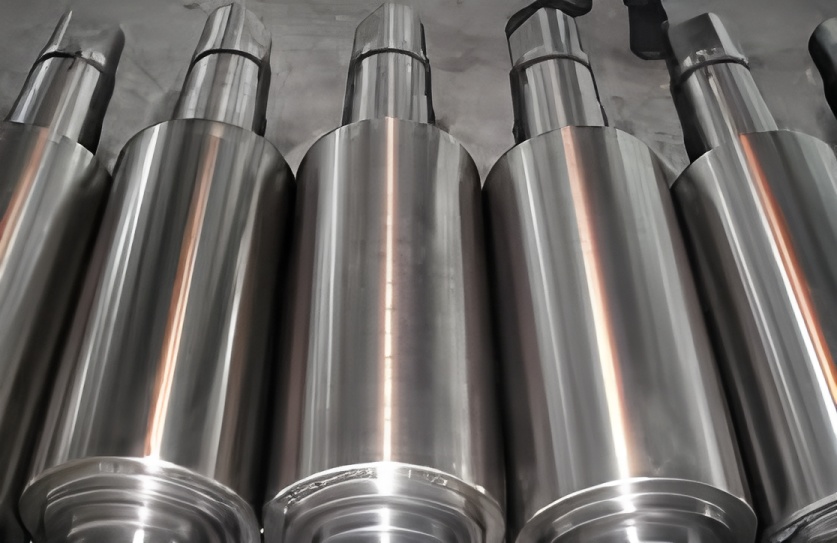
Strip Roller Surface Wear
Causes
Continuous friction between the strip and roller surface during rolling causes wear over time.
Excessive rolling speed and force increase friction, accelerating wear.
High strip surface roughness or foreign matter on the strip also accelerates roller wear.
Solutions
Adjust rolling parameters: reduce speed, optimize rolling force, and minimize unnecessary friction.
Pre-treat strips to remove surface contaminants, sharp edges, and reduce roughness.
Select roller materials with superior wear resistance or apply surface hardening treatments like quenching or hard chrome plating.
Strip Roller Surface Cracks
Causes
Improper heat treatment during manufacturing leaves residual stress inside the roller, which can release during rolling and cause cracking.
Rapid temperature fluctuations during rolling create repeated thermal stress, leading to thermal fatigue cracks.
Overloading causes surface stress to exceed the material’s strength limit, resulting in cracks.
Solutions
Optimize the strip roller manufacturing process, strictly control heat treatment, and eliminate residual stress.
Enhance the cooling system to ensure gradual temperature changes during rolling and prevent thermal shock.
Install overload protection devices. Remove minor cracks by grinding; replace the roller if cracks are severe.
Strip Roller Deformation
Causes
Long-term uneven rolling force causes localized overloading and deformation.
Improper handling or storage leads to gravity-induced deformation.
Inhomogeneous roller materials cause uneven deformation under rolling force.
Solutions
Adjust the rolling process to ensure even force distribution, including proper pass design and optimized strip width/thickness.
Improve transportation and storage methods using dedicated supports to keep rollers level.
Straighten slightly deformed rollers; reprocess or replace severely deformed ones.
Bearing Failure
Causes
Inadequate lubrication increases friction, causing overheating and wear.
Vibration and impact during rolling add dynamic loads, accelerating bearing fatigue.
Improper installation accuracy, such as incorrect clearance, affects bearing performance.
Solutions
Regularly inspect and replace lubricating oil, ensuring proper lubrication system operation. Select suitable lubricants and methods based on conditions.
Reduce equipment vibration and noise with shock absorbers and optimized drive systems to minimize bearing impact.
Install bearings strictly according to specifications, ensure precision, regularly check status, and adjust clearance promptly.
Seal Failure
Causes
Seals lose effectiveness over time due to aging and wear.
Harsh conditions like high temperature and oil contamination accelerate seal deterioration.
Incorrect installation (too tight or loose) compromises sealing.
Solutions
Regularly inspect seals, replacing aged or damaged ones with reliable, high-temperature, and oil-resistant materials.
Improve the sealing environment by adding protective devices against oil, dust, and contaminants.
Install seals according to requirements, ensuring correct dimensions and methods.